Performances of CNSL-based Polyurethane Technology for E-mobility
Improved hydrolytic stability, thermal and chemical resistance properties of CNSL-based polyols and diols support long-term durability of battery packages.

Introduction:
Cashew nutshell liquid (CNSL) is a bio-renewable resource found in the honeycomb structure of the cashew nutshell (Figure 1).
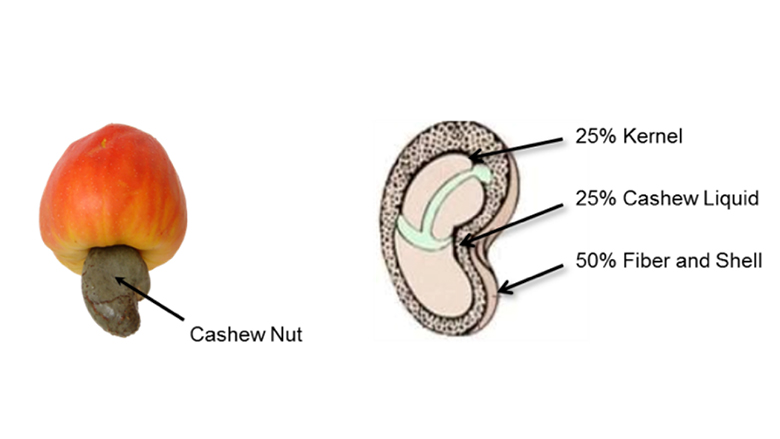
CNSL is a non-food chain product that would be disposed of otherwise. One of the most commercially useful chemicals from CNSL is Cardanol, a USDA certified bio-based product with 98% bio-content.
Cardanol represents an interesting and versatile monomer [1], as it contains three different functional groups (the aromatic ring, the hydroxyl group, and the double bonds in the alkyl chain), that can be either selectively or simultaneously modified according to the expected features of final product (Figure 2).
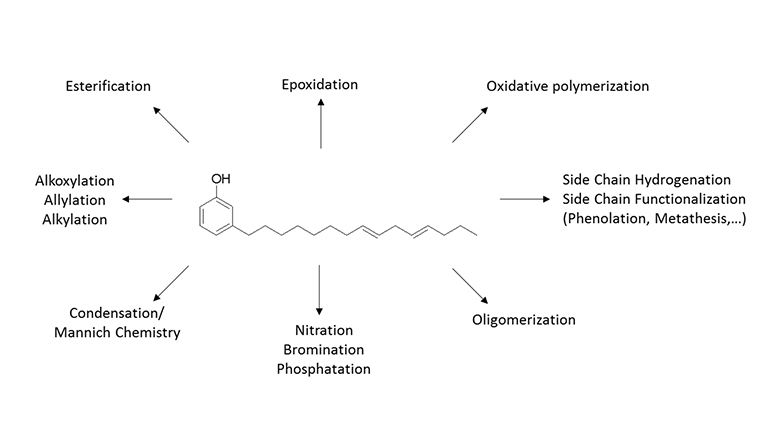
Cardanol has been used as a building block to design polyols and diols [2], isocyanate blocking agents [3], epoxies and epoxy curing agents [4] and used as additive for various formulations in epoxy and polyurethane [5].
In E-mobility applications, various chemistries and materials have been explored and properly selected to satisfy needs in composites, coatings, and adhesives [6]. Use of adhesives in vehicle construction has helped to achieve weight reduction of E-vehicles by replacing mechanical fasteners and welding and by allowing the use of lighter materials such as plastics, composites, alloy metals over heavy steel in design of battery packages and EV car in general. Chemistries for the adhesives include epoxies, polyurethanes, silyl modified polymers (SMP), silicones, acrylates [7]. Polyurethane technologies have been utilized in battery assembly because of its fast cure speed, offering high-throughput manufacturing, balanced strength and flexibility at low temperatures, excellent bond strength on many substrates, and formulation latitude to enhance its durability and fire resistance [8]. This study will address how CNSL PU technology may provide solutions to challenges like limited operating temperature and chemical resistance.
CNSL-based polyols, diols, and mono-ols have been designed to be used in polyurethane technology with key improvements, i.e., hydrophobicity, thermal/chemical resistance. Based on the known benefits from CNSL molecules [9], they have been investigated as PU adhesives in electric vehicle battery assembly adhesives and pottings. In this paper, we studied physical properties, aging resistances (hydrolytic stability, chemical resistance, thermal resistance) and investigated feasibility of the CNSL molecules to meet fire resistance and dielectric properties. Two mono-ols from CNSL technology were examined as a diluent to control viscosity and cure speed.
Materials and Methods
Table 1 presents the typical physical properties and bio-content of Cardolite bio-based mono-, di- and poly-hydroxyl functional derivatives that have been selected for the present study.
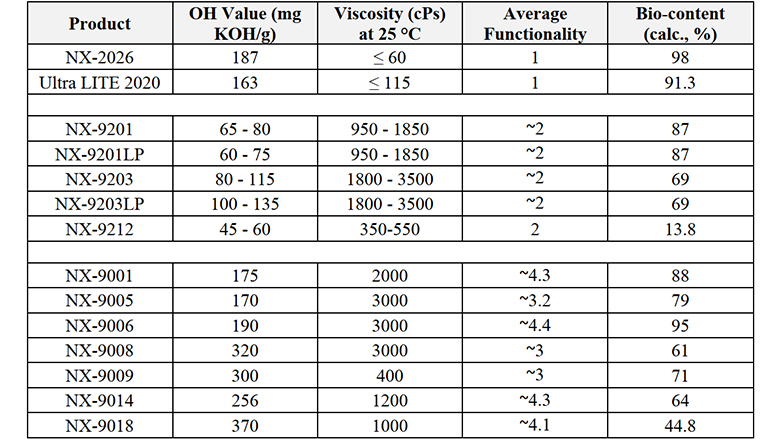
Viscosity, hydroxyl value, acid value, water content measurements on the different polyols were performed according to ASTM D4878, ASTM D4274, ASTM D4662 and ASTM D4672, respectively.
GPC analysis for cardanol-based polyols molecular weight characterization and functionality determination was performed on the same HITACHI HPLC-GPC systems, isocratic mode (0.5 ml/min flow rate; wavelength set to 280 nm). 3 columns connected in series (Tosoh TSKgel Super H1000, Tosoh TSKgel Super H2000, Tosoh TSKgel Super H3000, 3 µm, 6x150 mm; mobile phase: tetrahydrofuran) or a single column (Tosoh TSKgel G3000, 5 µm, 7.8x330 mm; tetrahydrofuran, buffered with 0.25% TFA and 0.25% TEA) thermo-stated at 40 °C were used. 11 narrow MW polystyrene standards have been used for the calibration curve.
Test specimens and results are obtained based on the following ASTM methods: Tensile strength/Elongation (ASTM D638), and chemical resistance (ASTM D6943), Shore D/A hardness (ASTM D2240), lap shear strength (ASTM D1002). All the adhesives were prepared by curing with Polymeric Methylene diphenyl diisocyanate (PMDI) at NCO index 100 at various of curing conditions. Each cure condition was selected based on specimen and test items.
Flexible polyurethane foams were prepared using toluene di-isocyanate (TDI 80/20) and characterized accordingly to ASTM D3574 for their physical properties, while horizontal UL-94 and CAL 117 (Section A, Part I vertical burning test) have been used to run fire resistance tests.
Results and Discussion
Cardanol (NX-2026) and mono-ethoxylate CNSL (Ultra LITE 2020) were added to polyols at different use-levels to understand their dilution efficiency (Figure 3) and cure speed effect (Figure 4). CNSL diluents can lower viscosity up to 30% at 5% use-level and 40% at 10% use-level. Cure speed effect was studied by looking at gel time. The polyol blends were cured with PMDI at NCO index of 100 at room temperature. Longer gel times were achieved by incorporating the CNSL diluents, offering maximum 37% and 59% increase in gel time at 5% and 10% use-levels, respectively. In later studies, we also investigated impact on strengths and Tg of the diluents.
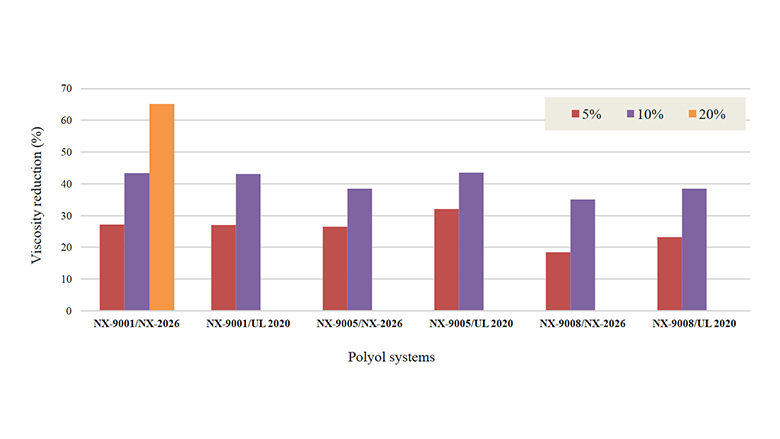
Figure 3 >> Mono-ols: dilution performance.
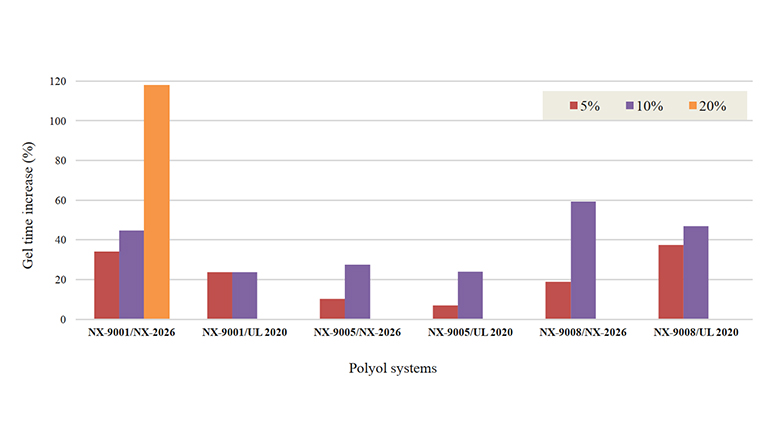
Figure 4 >> Cure speed effect of cardanol-based mono-hydroxyl functional derivatives NX-2026 and UL-2020.
*Click the images for greater detail
Adhesives for EV battery assembly require well balanced physical properties. Key ingredients include high functional polyols for strengths, diols for flexibility, and mono-ols for lowering viscosity in the case of filled formulations and maintain strengths and flexibility.
As evident from the tensile strength, elongation, bond strength on sand blasted steel, and Tg results of Cardolite polyols reported in Table 2, NX-9008, NX-9009, NX-9018 are high strength polyols, while NX-9005 offers excellent flexibility.
Among the different grades, NX-9008 shows the highest mechanical and thermal properties, but its medium viscosity (around 3000 cps @ 25 °C) and high modulus could potentially limit its usability in systems where lower viscosity and a certain flexibility are preferred. For this reason, the effect of NX-9203LP diol and mono-ols addition to NX-9008 has been studied (Table 3). As a result, 10% of the mono-ols helped lower the viscosity while maintained high strength, good adhesion and Tg; at the same time, blending NX-9203LP with NX-9008 provided increased flexibility and maintained good lap shear strength.
One of the ways for weight reduction on battery packages is to use plastics, composites, and aluminum. This observation prompted the evaluation of adhesion performances of the same polyols listed in Table 2 on other substrates, selected among plastics, composite, and Aluminum (Table 4). Overall, NX-9005 exhibited best adhesion on plastics while NX-9008 showed excellent adhesion on Aluminum, ABS, and composite.
Adhesives used in EV battery assembly require very rigorous qualification process. Among all tests, aging resistances under various harsh conditions represent one of the key items. Typical requirement is to maintain its strength at 70% minimum after being exposed to demanding conditions to determine durability of the adhesives. Industry standard hydrolytic stability test method has been 85 °C/85%RH for greater than 1000 hrs exposure, but for internal screening purpose, we employed 80 °C /7 days immersion condition with the lap shear specimen. The performance of hydrolytic stability of the adhesives (Table 5) NX-9008 and NX-9009 systems exhibited least adhesion decrease, followed by NX-9001, therefore allowing the assumption that good hydrolytic stability can be achieved when PU systems with high strength and good water resistance are used.
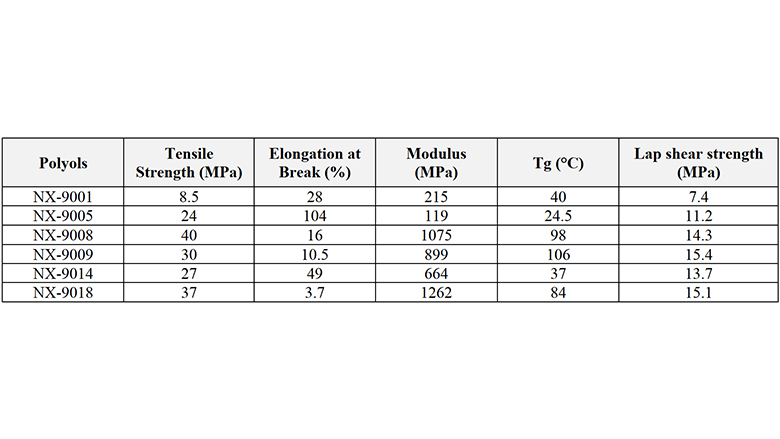
Table 2 >> Physical properties: strengths, flexibility, Tg, bond strengths (cured at 25 °C /16hr + 70 °C /4hr + 120 °C /2.5hr).
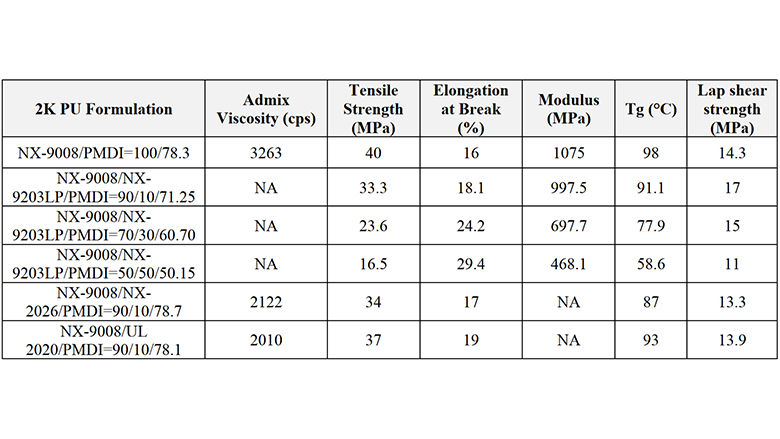
Table 3 >> Effect of physical properties using diols and mono-ols in 2K PU.
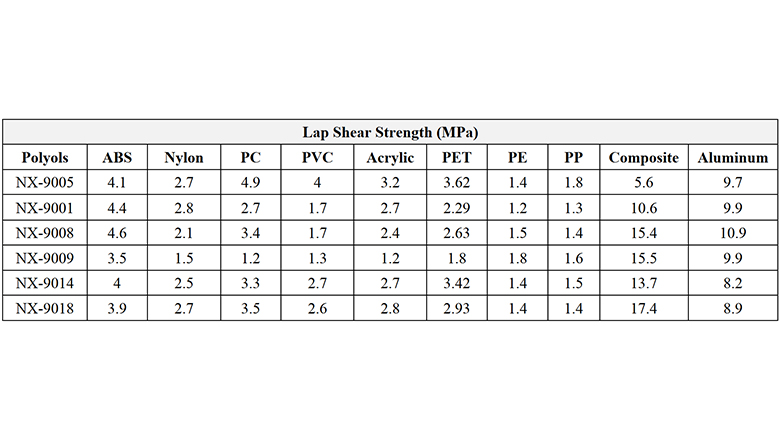
Table 4 >> Lap shear strength on plastics, composite, and Aluminum (cured at 60 °C/72hrs).
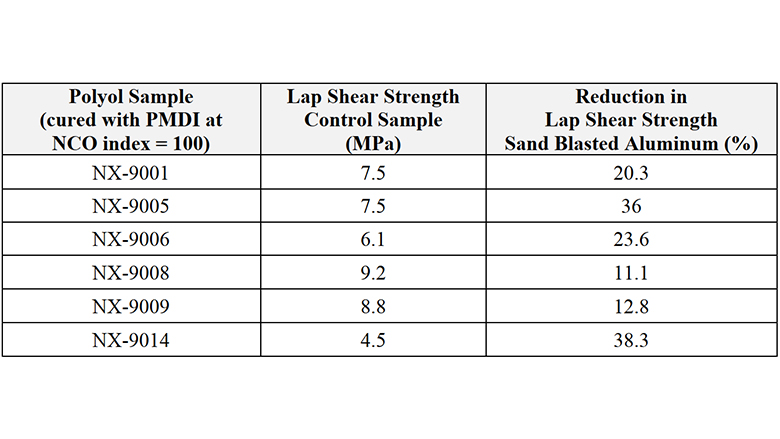
Table 5 >> 80 °C /7days hydrolytic stability (cured at 60 °C /72hrs).
*Click the images for greater detail
In terms of alkaline resistance (Table 6), NX-9008 has shown the best performance, followed by NX-9014 and NX-9001.
In order to expand the study and confirm the versatility of the polyols described above, an ethylene glycol/water blend has been prepared and used as testing media, to understand how typical coolant can impact adhesion upon 14 days immersion (Table 7). Amongst tested PU systems, NX-9008 displayed the best resistance to the coolant exposure followed by NX-9001 and NX-9005.
Since CNSL based molecules are known for improved thermal resistance and chemical resistance due to aromatic group in the backbone, another part of the test plan has been focused on tensile strength, elongation and Tg variation upon exposure to 135 °C/1000 hrs (Table 8). However, polyurethane systems are not typically known for high temperature durability [10], thus, we decided to limit temperature to be max 135 °C.
It is observed that the tested PU systems exhibited increased tensile strength, reduced elongation, and reduced Tg after 135 °C/1000hrs. However, NX-9008 showed increased Tg and least changes overall after the high temperature exposure. Based on the given aging test results, NX-9008 seems to be most suitable polyol for EV battery assembly adhesive formulation offering improved durability and strengths, followed by NX-9001.
Opportunities for 1K or 2K polyurethane technology in potting applications for electronics and EV have been growing because of ease of cure and satisfying physical properties of PU materials. With these premises, selected polyols were then examined for their durability and processability (Table 9) and for dielectric properties (Table 10).
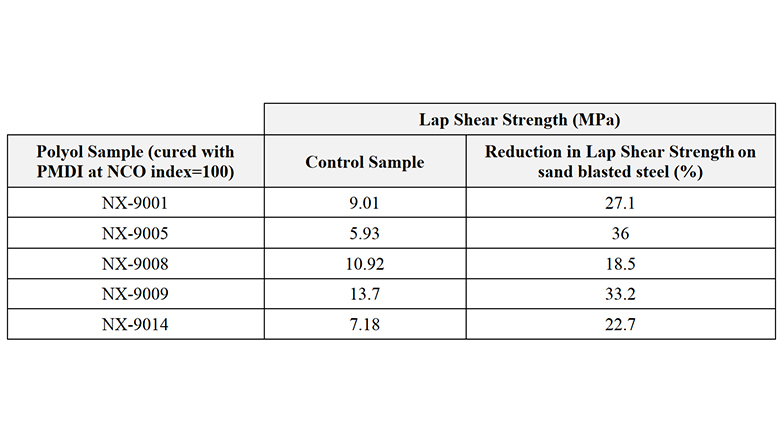
Table 6 >> Alkaline resistance (10% NaOH 14 days immersion), cured at 60 °C /72hrs.
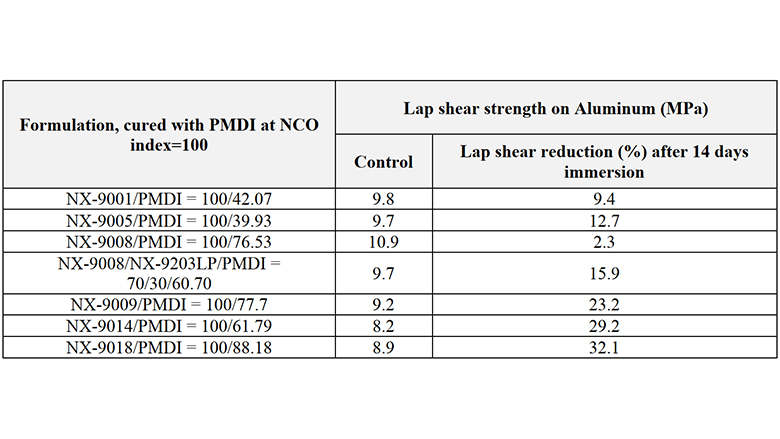
Table 7 >> Chemical resistance (Ethylene glycol/water = 50/50 mixture/14 days), cured at 25 °C/16hrs + 70 °C/4 hrs + 120 °C/2.5 hrs).
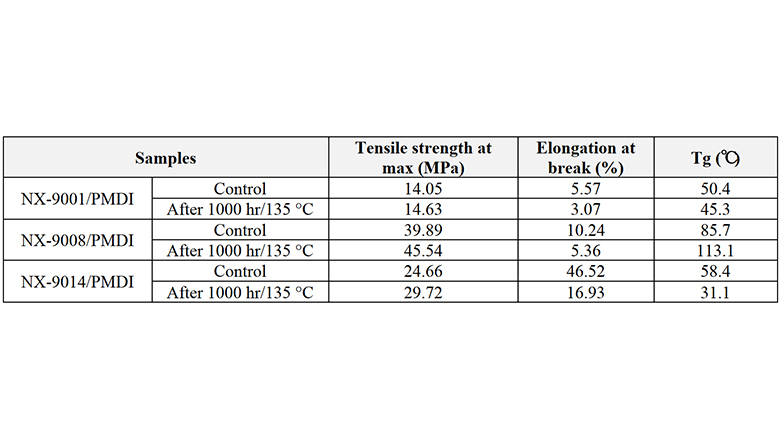
Table 8 >> Thermal stability after 135 °C /1000 hrs exposure.
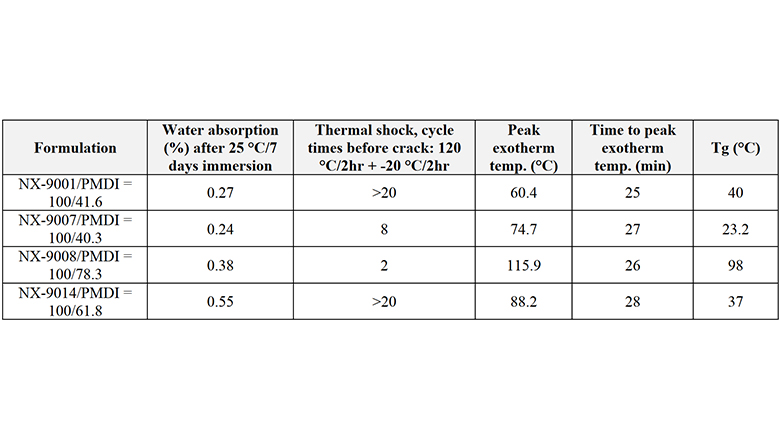
Table 9 >> 2K PU for water resistance, thermal shock and exotherm.
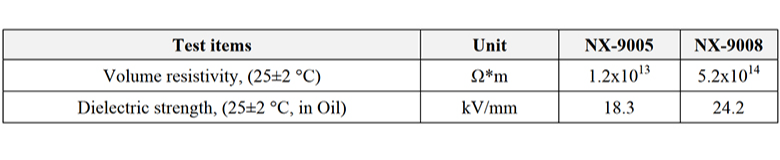
Table 10 >> Dielectric properties.
*Click on the images for greater detail
In comparison to epoxy systems, PU systems have offered better thermal shock resistance due to their good flexibility and low exotherm. NX-9001 and NX-9014 offered good thermal shock performance, while NX-9001 and NX-9007 exhibited better water resistance. General requirements in Dielectric properties in EV include Dielectric strength of greater than 10 kV/mm and volume resistivity of greater than 1.0x10¹⁴ Ω. m. NX-9008 exhibited most suitable dielectric properties for EV pottings, while NX-9005 satisfied dielectric strength requirement.
Materials used in EV battery packages need basic fire resistance requirement, UL94 V0 (burning stops within 10secs). To improve fire resistance through thermal managing, thermally conductive adhesives are commonly used in the battery packages, while thermal conductivity is controlled by specific fillers, such as alumina, Boron nitride, while fire resistance is achieved by use of fire retardants. To implement the study, we then formulated polyurethane adhesives with two different types of fire retardants and compared performance of CNSL polyol (NX-9008) against a castor oil-based polyol, selected as benchmark not only for its bio-derived chemical backbone, but also for comparable OH value.
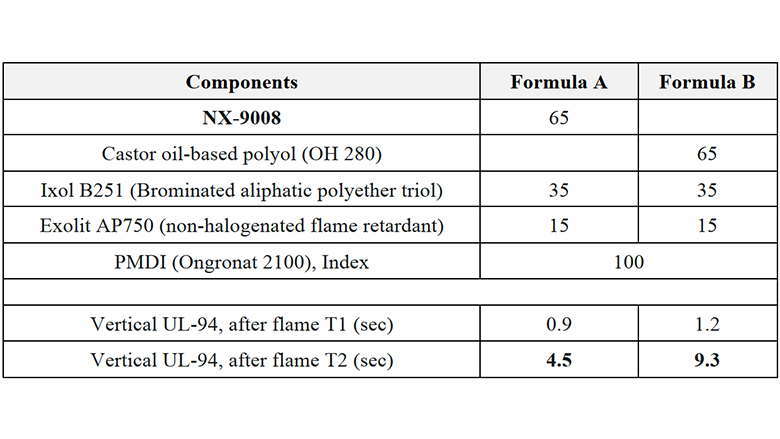
Table 11 >> Fire resistance study.
Both formulations passed UL-94 V0 requirement. It is understood that polyols are not key ingredient for meeting UL-94 V0; however, we observed that CNSL polyol NX-9008, helped to enhance its fire resistance by offering significantly shorter after-flame T2 (Table 11).
To exploit the potential applicability of cardanol-based hydroxy-functional derivatives in polyurethane systems for automotive applications (e.g. car seats) and confirm the versatility of cardanol-chemistry, two of the cardanol-based polymeric diols described in Table 1, namely NX-9201 and NX-9203, have been tested in a reference flexible PU foam formulation. Given their chemical backbone (presence of aromatic ring) and hydroxyl value (higher than the one commonly used in the formulation of flexible PU foams), these two grades have been introduced only as partial replacement of a high molecular weight polyether triol (Table 12).
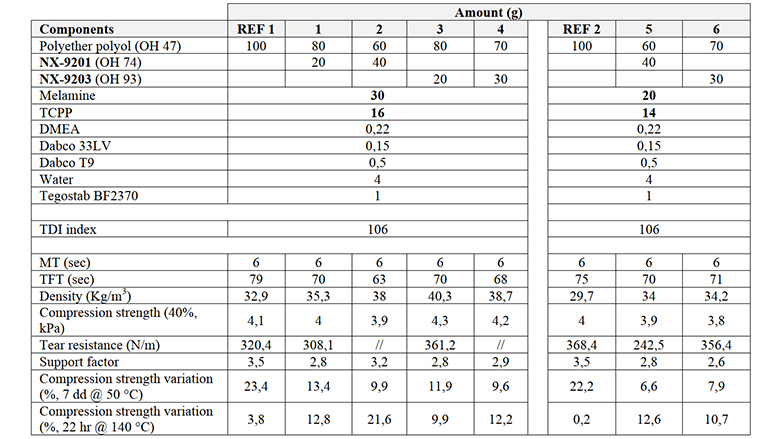
Table 12 >> Performances of cardanol-based polymeric diols NX-9201 and NX-9203 in a reference flexible PU foams.
In particular, NX-9201 and NX-9203 have replaced maximum 40% and 30% of the reference polyether polyol, respectively (NX-9203 is characterized by higher aromatic content than NX-9201, so its overall more rigid chemical backbone doesn’t allow higher dosages without incurring in a negative impact on final flexibility). Both cardanol-derivatives exhibit faster reactivity (shorter gel time than reference), with final mechanical properties not too far from reference.
As in the case of PU adhesives, one of the main benefits imparted by the introduction of cardanol-derivatives in flexible PU foams is an increase in hydrolytic stability, as evident from the lower compression strength variation values recorded after having immersed foams in distilled water for 7 days at 50 °C.
When aged upon heating (22 hrs storage at 140 °C), cardanol-based foams show an increase in compression strength, with a variation higher than the fully polyether-based systems. This effect can be explained by the presence of unsaturations in cardanol’s C15 side chain in cardanol-polymeric diols, that can partially crosslink at high temperatures, causing an increase in crosslinking density and a subsequent slightly higher compression strength.
At the same time, cardanol-derivatives are characterized by a certain aromatic content (depending on cardanol-amount in each polyol backbone); in particular, NX-9201 has an aromaticity around 5.2%, while NX-9203 around 17.5%. For this reason, an adjustment of flame retardants loads has been made, reducing melamine and TCPP from 30 parts and 16 parts, respectively (Formula REF. 1, 1, 2, 3, 4), to 20 parts and 14 parts (Formula REF. 2, 5, 6), without affecting the overall performances.
All the resulting foams have been then tested for their fire resistance performances according to CAL 117 (Section A, Part I vertical burning test), collecting after-flame (Figure 5) and char length (Figure 6) values.
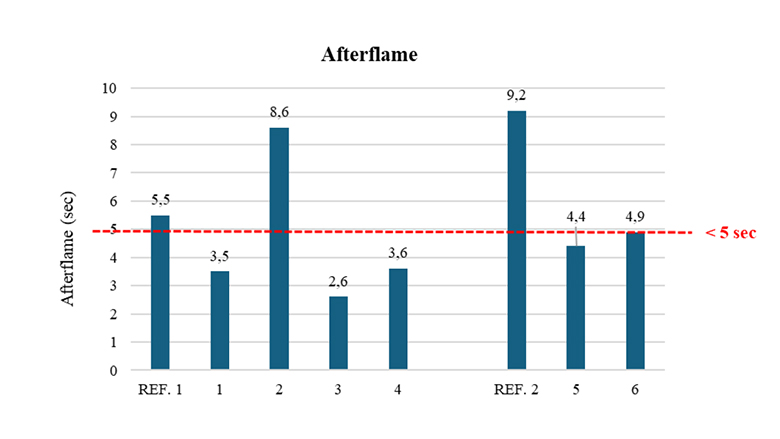
Figure 5 >> After-flame values (accordingly to CAL 117, Section A, Part I, vertical burning test) of flexible PU foams as in Table 12.
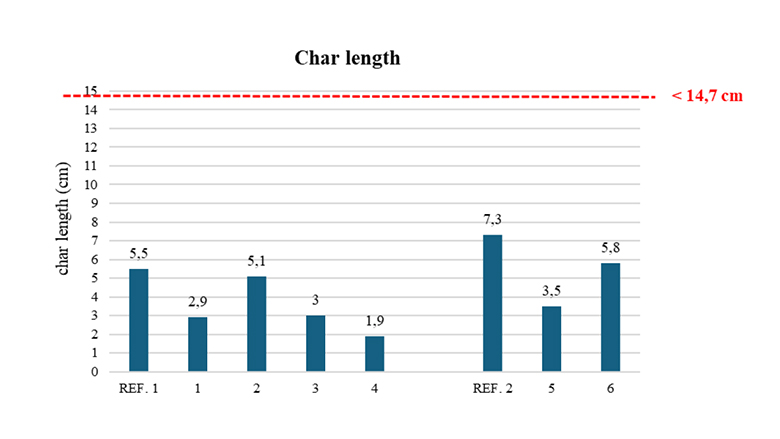
Figure 6 >> Char-length values (accordingly to CAL 117, Section A, Part I, vertical burning test) of flexible PU foams as in Table 12
*Click on the images for greater detail
In order to fulfill the requirements of the specific fire test method used in the study, after-flame and char length values must be lower than 5 seconds and 14.7 cm, respectively. As evident from the two graphs, the introduction of cardanol-polymeric diols, in general, significantly contributes to a reduction of both testing items, still providing good values even in presence of a reduced amount of flame retardants.
Conclusions
In this study, we identified utility of CNSL polyols, diols and mono-ols in EV adhesives, pottings, along with preliminary encouraging results in flexible PU foams. CNSL mono-ols can be used for lowering viscosity while maintaining strengths and Tg, while cardanol-derived polymeric diols offer increased flexibility, excellent hydrolytic stability, not only in PU adhesives and pottings, but also in flexible PU foams, where they also showed a good potential to fire resistance improvement. At the same time, aging resistance studies, dielectric properties, and fire resistance test results suggest that NX-9008 is a suitable polyol for Polyurethane EV adhesives and pottings formulations.
Acknowledgements
"Performances of CNSL-Based Polyurethane Technology for E-mobility" 2024 Polyurethanes Technical Conference 30 September–2 October, 2024, Atlanta, GA, USA, Published with permission of CPI, Center for the Polyurethanes Industry, Washington, DC.
References:
[1] a) Anilkumar, P. Cashew Nut Shell Liquid: A goldfield for functional materials Springer International Publishing AG 2017; b) Voirin, C.; Caillol, S.; Sadavarte, N. V.; Tawade, B. V.; Boutevin, B.; Wadgaonkar P. P. Polym. Chem., 5, 3142, 2014
[2] a) Bhunia, H.P.; Nando, G.B.; Chakia, T. K.; Basak, A.; Lenka, S.; Nayak, P.L. European Polymer Journal, 35, 1381, 1999; b) Ionescu, M.; Wan, X.; Bilić, N.; Petrović, Z., S. J. Polym. Environ., 20, 647, 2012
[3] a) Campaner, P.; Kim, Y. M.; Tambe, C.; Natesh, A. Int. J. Adv. Sci. Eng. 7, 2, 1642, 2020; b) Campaner, P.; Dinon, F.; Tavares, F.; Kim, Y. M.; Natesh, A. Int. J. Adv. Sci. Eng. 7, 4, 1904, 2021
[4] a) Wazarkar, K.; Sabnis, A. Prog. Org. Coatings 118, 9, 2018; b) Ma, Z.; Liao, B.; Wang, K.; Dai, Y.; Huang, J.; Pang, H. RSC Adv., 6, 105744, 2016; c) Mora, A.S.; Decostanzi, M.; David, G.; Caillol, S. Eur. J. Lipid Sci. Technol. 121, 8, 1800421, 2019
[5] Reese, J. R.; Moore, M. N.; Wardius, D. S.; Hager, S. L. EP1930355
[6] a) Wazeer, A.; Das, A.; Abeykoon, C.; Sinha, A.; Karmakar, A. Green Energy and Intelligent transportation, 2, 100043, 2023; b) Mohanty, A.K.; Vivekanandhan, S.; Tripathi, N.; Roy, P.; Snowdon, M.; Drzal, L.T., Misra, M. Composites Part C 12, 100380, 2023
[7] Cavezza, F.; Boehm, M.; Terryn, H.; Hauffman, T. Metals, 10, 730, 2020
[8] a) Akindoyo, J. O.; Beg, M.D.H.; Ghazali, S.; Islam, M. R.; Jeyaratnam, N.; Yuvaraj, A.R.RSC Adv, 6, 114453, 2016; b) Golling, F.E.; Pires, R.; Hecking, A.; Weikard, J.; Richter, F.; Danielmeier, K.; Dijkstra, D. Polymer International, 68, 5, 848, 2018
[9] Kim, Y.M: Natesh, A.; Campaner, P.; Hong, X. CPI Polyurethanes Technical Conference 2022, Proceedings of 2022 CPI Conference, National Harbor (MD), October 3-5, 2022
[10] Ketata, N.; Sanglar, C.; Waton, H.; Alamercery, S.; Delome, F.; Raffin, G.; Grenier-Loustalot, M.F. Polymers & Polymer Composites, 13, 1, 1-26, 2005
Looking for a reprint of this article?
From high-res PDFs to custom plaques, order your copy today!