Adhesives Mag logo
search
cart
facebook twitter linkedin youtube
  • Sign In
  • Create Account
  • Sign Out
  • My Account
Adhesives Mag logo
  • NEW PRODUCTS
  • NEWS
    • Adhesives & Sealants Headlines
    • Mergers/Acquisitions
    • Market Trends
    • TOP 20
  • TOPICS
    • Finished Adhesives and Sealants
    • Pressure-Sensitive Adhesives (PSAs)
    • Coatings
    • Raw Materials and Chemicals
    • Materials Handling/Processing
    • Meter/Mix/Dispense
    • Curing
    • Testing/Quality Control
    • Packaging of Adhesives & Sealants
    • Converting/Packaging
    • Composites
    • Sustainability
  • EVENTS
    • MAX
    • ASI Academy
    • Events Calendar
  • COLUMNS
    • European Perspectives
    • Strategic Solutions
    • Supply Chain Strategies
    • Tape Talk
  • MULTIMEDIA
    • Videos
    • Podcasts
    • Webinars
    • eBooks
  • EXPLORE
    • Adhesives in Action
    • Blog
    • ASI Store
    • Industry Links
    • Market Research
    • Classifieds
  • DIRECTORIES
    • Buyers' Guide
    • Global Adhesives & Sealants Directory
    • Raw Materials, Chemicals, Polymers and Additives Handbook
    • Equipment Handbook
    • Distributor Directory
  • EMAGAZINE
    • EMAGAZINE
    • ARCHIVE ISSUES
    • ADVERTISE
      • Custom Content & Marketing Services
    • CONTACT
  • SIGN UP!
Adhesives and Sealants TopicsFinished Adhesives and SealantsMeter/Mix/DispenseTesting/Quality Control

Case Study

Benefits of Potting Electronics in a Vacuum

Vacuum potting is mainly aimed at electronic components with small openings and complex internal structures.
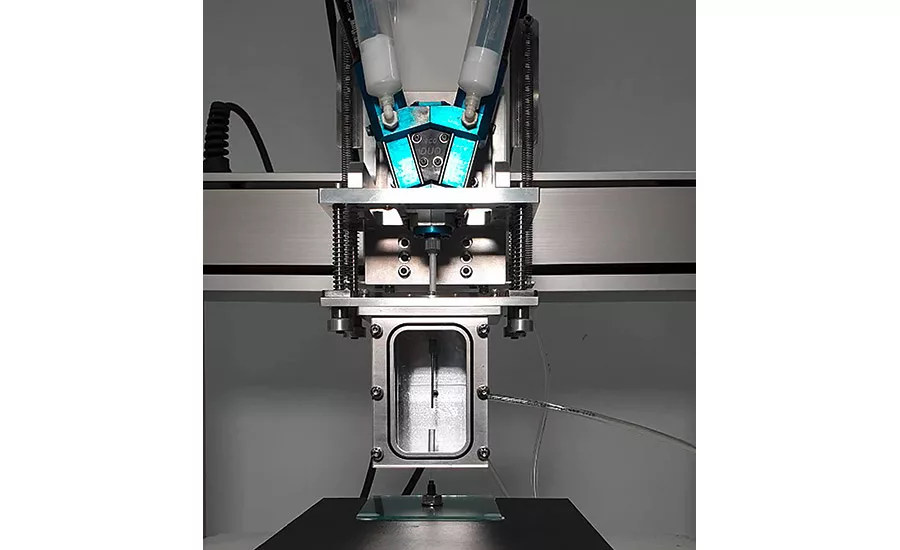
ViscoTec potting in vacuum
Through a dispensing application test in the new laboratories of ViscoTec Asia, a customer request recently highlighted the advantages of potting under vacuum.
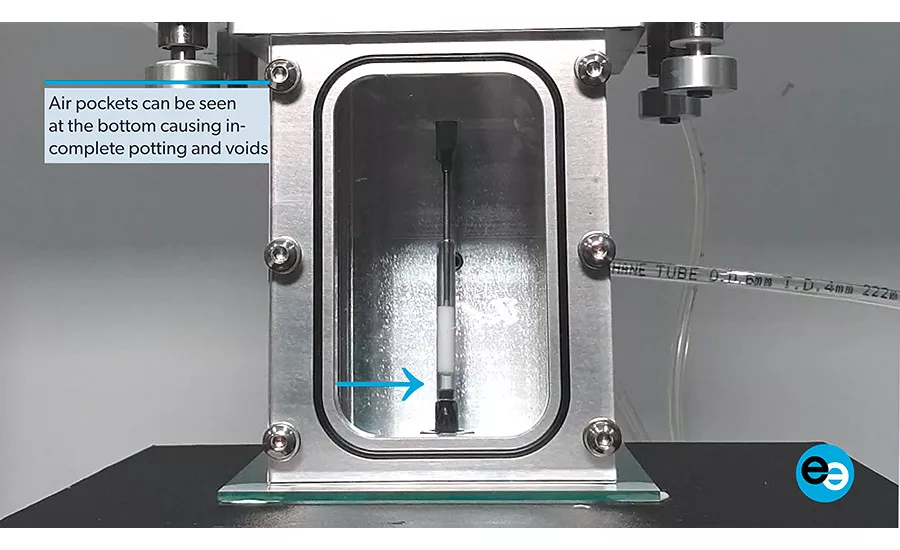
ViscoTec potting in vacuum Figure 1
Figure 1. Initial dosing tests without vacuum resulted in cavities in the cured material.
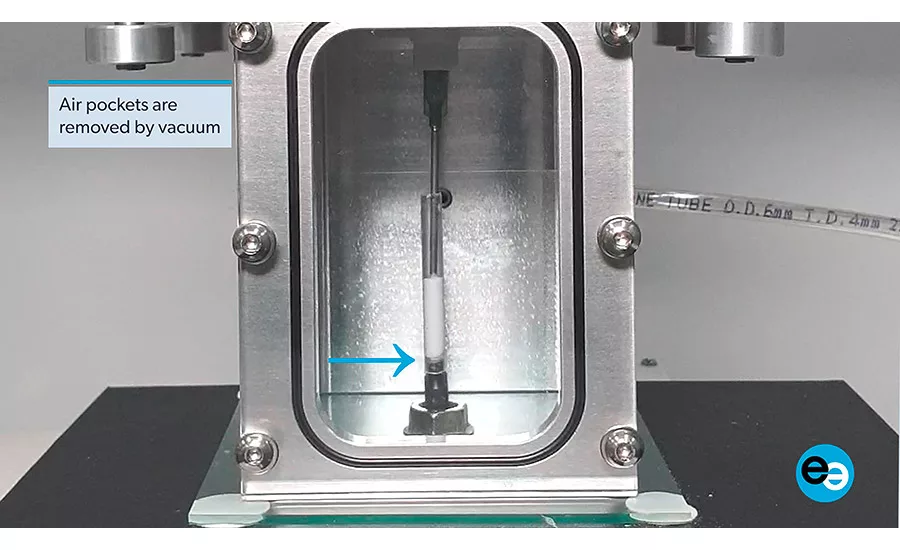
ViscoTec potting in vacuum Figure 2
Figure 2. After implementation of the vacuum chamber, the process could be completed in under 10 seconds and without cavities in the cast material.
ViscoTec potting in vacuum
ViscoTec potting in vacuum Figure 1
ViscoTec potting in vacuum Figure 2
June 10, 2020

The potting of electronic components involves filling the assembly with a compound such as liquid resin (e.g., epoxy, silicone, polyurethane) to protect it from environmental or use conditions like moisture, humidity, and vibration. Any air entrapment in the potting compound can result in air bubbles that may cause performance problems in the finished component.

Potting under vacuum is therefore frequently required to prevent air entrapment, especially with the increasingly small and complex assemblies required in today’s electronics. Through a dispensing application test in the new laboratories of ViscoTec Asia, a customer request recently highlighted the advantages of potting under vacuum.


Customer Needs

The customer initially approached ViscoTec Asia with a request for a solution to a specific challenge. In the application, a hole with a diameter of 2.8 mm had to be potted. The primary goal was to achieve a potting time of less than 10 seconds, completely without any entrapped air. This was made more difficult due to the fact that the casting area below the hole consists of metal coils that are prone to trapping air bubbles.

Initial dosing tests without vacuum showed that the potting could only be completed in 24-32 seconds and at a lower flow rate. In addition, cavities were found in the cured material (see Figure 1). After implementation of the vacuum chamber, as shown in Figure 2, the process could be completed in under 10 seconds and without cavities in the cast material. Potting under vacuum resulted in both higher productivity and better quality.

The tests could be carried out with the standard equipment in ViscoTec Asia’s test laboratories. For this request, the equipment used included a preeflow eco-DUO 2-component dispenser, a tabletop robot, a vacuum pump, and the vacuum chamber.


Encapsulating Sensors and Other Components

Prior to this request, ViscoTec Asia had carried out several dosing tests with the vacuum chamber. In most cases, these were tests for the encapsulation of sensors. As sensors are getting smaller and smaller, encapsulation is required to keep the internal elements in position to make them robust and durable. Vacuum potting is mainly aimed at electronic components with small openings and complex internal structures.
“We know that simplicity is always preferred, so vacuum potting is only recommended when necessary,” said Melvyn Teo, managing director of ViscoTec Asia. “The solution depends on the customer’s expectations, the application and the product design. It is important that we clarify the details in close cooperation with our customers before deciding what is best suited.”


For more information, visit www.preeflow.com/en.


Listen to our podcast with Melvyn Teo!

KEYWORDS: adhesives in electrical/electronic automation dispensing epoxies polyurethanes potting compound silicones

Share This Story

Looking for a reprint of this article?
From high-res PDFs to custom plaques, order your copy today!

Recommended Content

JOIN TODAY
to unlock your recommendations.

Already have an account? Sign In

  • mouse in hole

    Using Foam Sealants for Pest Prevention

    According to the National Pest Management Association,...
    Finished Adhesives and Sealants
    By: Kevin Corcoran
  • linked network nodes

    Using the Power of AI for Adhesive and Sealant Formulation

    With the help of software solutions, adhesive formulators...
    Raw Materials and Chemicals
    By: Karen Parker
  • top20-hero.jpg

    2024 ASI Top 20: Leading Global Manufacturers of Adhesives and Sealants

    ASI's annual ranking of the top 20 global adhesive and...
    Pressure-Sensitive Adhesives (PSAs)
Manage My Account
  • eMagazine Issues
  • Newsletters
  • Online Registration
  • Manage My Preferences
  • Subscription Customer Service

More Videos

Popular Stories

Image of scrabble pieces with pictures of people

Avery Dennison Completes Acquisition of Flooring Business

Picture of a laboratory

Henkel Launches Packaging RecycLab in China

adhesives

The Invisible Strength of Polyurethane Adhesives

ASI Top 20 website

Events

January 1, 2030

Webinar Sponsorship Information

For webinar sponsorship information, visit www.bnpevents.com/webinars or email webinars@bnpmedia.com.

View All Submit An Event

Products

Structural Adhesives: Properties, Characterization and Applications

Structural Adhesives: Properties, Characterization and Applications

See More Products

ASI CASE EBOOK

Related Articles

  • GettyImages-1462727729.jpg

    The Benefits of Caprolactone Technology in Reactive Hot Melt Adhesives

    See More
  • Adhesive syringes

    Packaging a Solution for an Electronics Manufacturer

    See More
  • Valves Benefit Vacuum Potting System

    See More

Related Products

See More Products
  • handbk-of-ad-and-surface-pr.gif

    Handbook of Adhesives and Surface Preparation

  • handbook advesives and sealants.gif

    Volume 1: Handbook of Adhesives and Sealants, 1st Edition

  • social media

    Optimizing Social Media from a B2B Perspective

See More Products
×

Keep the info flowing with our newsletters!

Get the latest industry updates tailored your way.

JOIN TODAY!
  • RESOURCES
    • Advertise
    • Contact Us
    • Directories
    • Store
    • Want More
  • SIGN UP TODAY
    • Create Account
    • eMagazine
    • Newsletters
    • Customer Service
    • Manage Preferences
  • SERVICES
    • Marketing Services
    • Reprints
    • Market Research
    • List Rental
    • Survey & Sample
  • STAY CONNECTED
    • LinkedIn
    • Facebook
    • Youtube
    • X (Twitter)
  • PRIVACY
    • PRIVACY POLICY
    • TERMS & CONDITIONS
    • DO NOT SELL MY PERSONAL INFORMATION
    • PRIVACY REQUEST
    • ACCESSIBILITY

Copyright ©2025. All Rights Reserved BNP Media.

Design, CMS, Hosting & Web Development :: ePublishing