Adhesives for Lightweighting of Structures—Drivers, Selection, Challenges
Lightweighting of structures and combining of materials to take advantage of their best properties is becoming a part of engineering design, and adhesives will play an increasing role in those future designs and applications.

Image courtesy of May Lim via gettyimages.com.
Lightweighting of structures is most often associated with automotive structures. However, lightweighting is a challenge across the transportation sector, including trucks, trailers, buses, passenger rail cars, and even heavy earth-moving equipment and cranes. For cars, lightweighting is focused on improving fuel economy. Most of the load the car moves is the car itself. But in other areas, lightweighting is focused on load-carrying economy (Figure 1). The lighter the structure, the greater the load that can be conveyed at the same overall vehicle weight.
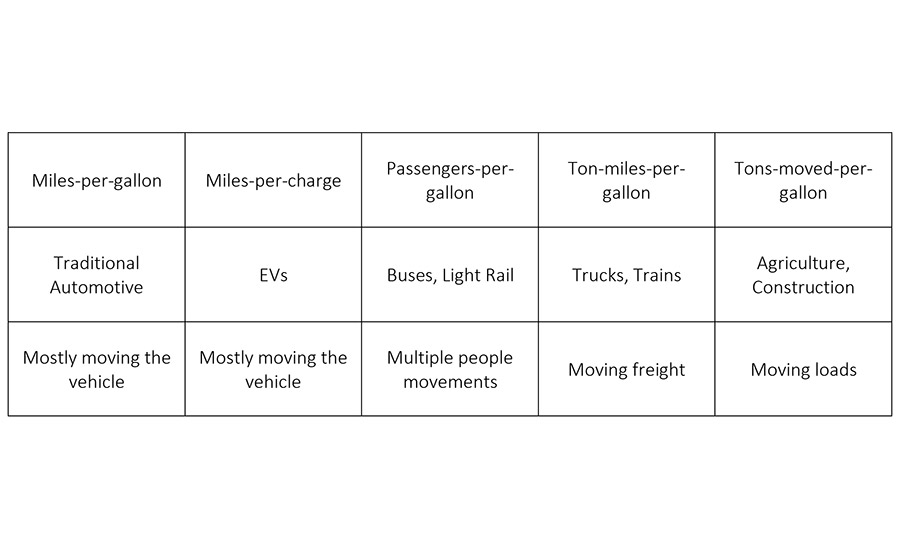
Figure 1. Load-carrying fuel economy
Drivers
Adhesives serve an important role in lightweighting, with exploration focused on joining dissimilar materials for lightweight structures. A previous article (see ASI, Oct. 2021) introduced the concepts for adhesives selection: suitability, compatibility, and capability. Suitability refers to the appropriate use of an adhesive, as opposed to other joining methods, such as welding or mechanical fastening. Compatibility refers to the ability of the adhesive to bond to both surfaces. Capability refers to its ability to perform structurally under all circumstances. Figure 2 shows some of the many possible end uses for bonding in lightweight structures.
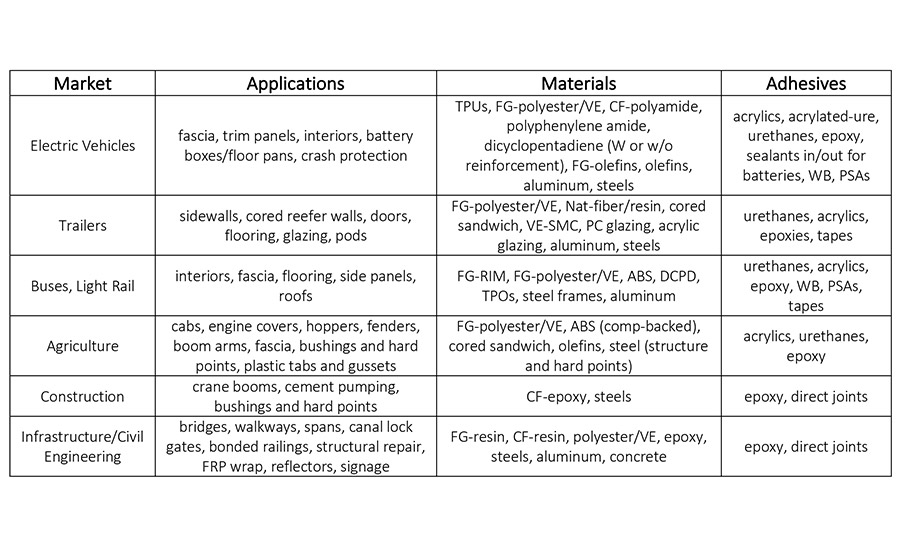 Figure 2. Potential end uses for bonded systems in lightweighting
Selection
Figure 2 displays certain trends in adhesive selection for transportation. Epoxies offer the highest temperature resistance and have been used with steels for years. Acrylics and urethanes offer good versatility for bonding polymer surfaces and combining with metals. Interior components are bonded with pressure-sensitive adhesives, sprayed/dried waterborne adhesives, films, and hotmelts.
Clearly, there are many possible combinations, and selection depends on location and end use. Almost every adhesive type is conceivable to use on some structure, somewhere. Transportation is the largest adhesive end-use sector, and automotive is the largest portion of that, by far.
Automotive focuses on metal structures, most of which are spot welded. But many dissimilar metals combinations are non-weldable. Increased use of aluminum and special, high-strength steels is driving the use of bonded structures. Combinations of composites to metals and plastics to metals are non-weldable, as are combinations of dissimilar plastics and plastics to composites. In modern construction applications, most combinations can benefit from adhesive bonding.
Vehicles have been losing weight for fifty years. For electric vehicles, low weight is paramount for increasing range. However, another method for increasing range is making improvements in the battery itself. New chemistries and electrode materials are allowing increased energy density. This can increase range by increasing the available power or by decreasing the battery size, thereby reducing weight. These new chemistries and constructions will require adhesive and sealant compatibility.
Challenges
Electric vehicles have structural challenges, partly because the vehicle is built around the battery box. It becomes part of the floor pan structure and offers crash protection for the battery. There are also crash protection challenges for the occupants for front, rear, side-impact, and roll-over protection. Bumper systems and fascia are plastics and composites, which are now used for life-cage and roll-over protection.
Most EV battery boxes are aluminum, and electrical insulation is a concern. A thin, fiberglass composite facing can be applied. There are other needs for electrical and thermal insulation within the battery box and for the batteries themselves, offering more opportunities for adhesives and sealants.
Another challenge is that of structural design with adhesives. Structures are routinely modeled for both structural performance and crash-worthiness. Because adhesives are visco-elastic, special testing and modeling techniques are required to include adhesives in the load path for structural design.
Test joints must also be evaluated under many environmental and mechanical stress conditions, often combined. Adhesive providers are increasingly involved with design teams to ensure the needed information is available. This goes beyond the common single lap shear test data to include fairly sophisticated testing methods to provide true engineering data (see ASI, Oct. 2020).
For any vehicle, incorporation of adhesives requires changes in manufacturing culture, which is another challenge. Purely bonded structure is rare. However, adhesives and sealants are combined with other joining methods to offer the advantages of better stress distribution, quieter rides, and corrosion control. The combination of self-piercing rivets (rivet bonding), spot welds, and friction-stir spot welds (weld bonding) is common for aluminum structures. Weld bonding steel structures has been commonplace for decades.
Lightweighting of structures for many end uses is becoming an obsession in the design community. Combinations of materials to take advantage of their best properties in concerted fashion is now part of the engineering culture. Adhesives will play an increasing role in future designs and applications.
For additional information, email Dr. Ritter at gritter@chemquest.com or visit www.chemquest.com.
Looking for a reprint of this article?
From high-res PDFs to custom plaques, order your copy today!