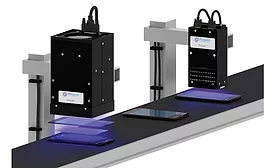
One of the most popular solutions for utilizing adhesives, coatings, polymers, and resins in green manufacturing without resorting to solutions that require time or heat to cure/dry involves using ultraviolet (UV) radiation and a material that is capable of utilizing its energy to provide for a fast, on-demand cure.
Let’s face it, it’s a lot easier to talk about and set sustainability goals than it is to actually create and launch technically, operationally, and commercially viable greener formulas.
Roughly one-third (34%) of manufacturers in our latest survey expect their business’ recovery to take three months or less, while 37% expect it to take four to six months.
To date, three surveys have been conducted by Clear Seas Research to discover how manufacturers view their current business and future outlook in light of the COVID-19 pandemic.
Silicone-based coatings are among the most versatile materials used in a variety of industrial applications, including pressure-sensitive tapes, protective coatings, and the protection of printed text on packaging.
You need to look at so-called “shadow curing” options. Most UV-cured systems are based on acrylates and methacrylates and cure free-radically by the decomposition of a photoinitiator.
The global ramifications of COVID-19, in terms of both our physical and economic well-being, are daunting. Some regions have been quite successful in avoiding widespread losses, others are beginning to see cases decline and are returning somewhat to normalcy, and still others have yet to see the worst.
Epoxy silanes like GLYMO and GLYEO are adhesion promoters used in food packaging, but safety issues have prompted the development of new alternatives.
April 21, 2020
Consumers expect the food industry to provide safe products that comply with the latest regulations. FEICA, the Association of the European Adhesive and Sealant Industry, recommends avoiding the use of epoxy silanes in food contact applications, and the European Union is expected to set new limits during the course of this year. These limits will require complex testing methods that lead to challenges for converters and packaging manufacturers.
Scouting for collaboration opportunities outside your company is a process that begins with defining and prioritizing the market's needs in a way that anyone unfamiliar with your business can understand.
Meeting the technical and product needs of customers can be very challenging, especially if R&D resources are constrained or you do not have the right in-house expertise to deliver a timely response.