Advancing Hot-Melt Adhesive Performance for Automotive Interiors
Technology from Synthomer ushers in a new era of polyolefin-based hot-melt adhesives.
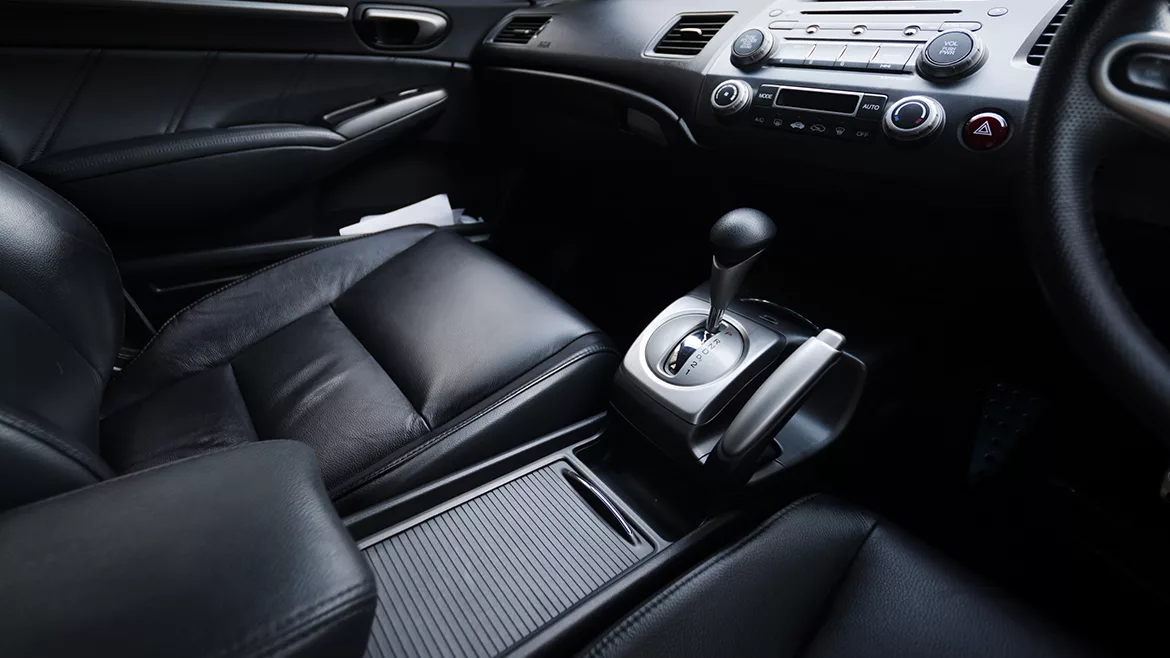
As automotive interiors evolve toward lighter, more complex designs, adhesives are playing an increasingly critical role in ensuring durability, aesthetics, and safety. Above-the-belt applications — such as instrument panels, door trims, headliners, and decorative elements — are among the most demanding environments for hot-melt adhesives (HMAs). These areas face extreme thermal cycles, exposure to solar load, and stringent OEM specifications for long-term performance.
Traditionally, adhesive selection for these applications has involved trade-offs between heat resistance, flexibility, and process efficiency. Synthomer's latest polyolefin (PO) polymer technology, AERAFIN™ Polymers, changes that equation by enabling advanced hot-melt formulations designed to deliver significant performance improvements across multiple dimensions.
The Challenge: Heat, Stress, and Versatility
Interior components must withstand temperatures ranging from sub-zero conditions to cabin heat exceeding 90 °C while maintaining bond integrity on diverse substrates such as LGF-PP, talc-PP, ABS, and PC-ABS. Conventional HMAs often struggle to combine high heat resistance with low-temperature flexibility, forcing converters to compromise on durability or ease of processing.
OEMs and tier suppliers need solutions that meet these thermal and mechanical demands without sacrificing production speed or compatibility with existing application systems.
Acronym note: LGF-PP — long glass fiber reinforced polypropylene; talc-PP — talc-filled polypropylene; ABS — acrylonitrile butadiene styrene polymer; PC-ABS, commonly known as PC/ABS — a blend of two popular thermoplastic materials: polycarbonate (PC) and ABS.
A New Era in Polyolefin-based HMAs
Synthomer AERAFIN Polymer technology enables hot-melt adhesives that can meet or exceed OEM requirements in above-the-belt automotive applications. By leveraging tailored polyolefin chemistry, this polymer-based HMA formulations can deliver:
- Dual temperature resistance: Both high heat resistance and low-temperature flexibility in a single formulation — for interiors exposed to extreme thermal cycles.
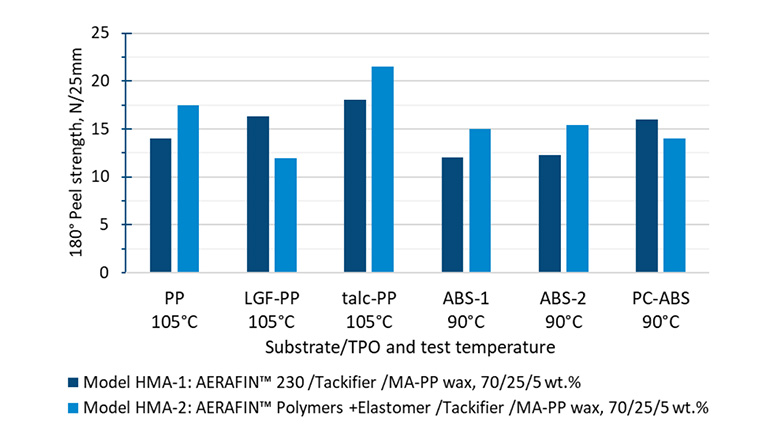
- Bonding strength at elevated temperatures: Proven adhesion on challenging substrates, including LGF-PP, talc-PP, ABS, and PC-ABS, even under high-heat conditions.
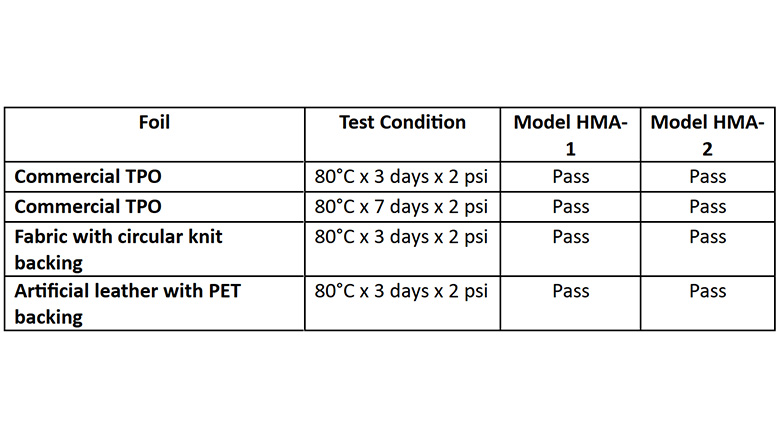
- Heat resistance: Very good performance in SAFT, 180-degree peel strength, thermal creep, and dead load tests.
- Anti-blocking properties: Suitable for pre-applied HMA processes, enabling clean handling and efficient assembly.
Formulation Flexibility and Customization
Synthomer has developed model formulations using AERAFIN 230 in combination with elastomers, other polyolefin polymer grades, and tackifiers that can meet diverse OEM requirements. These formulations can be further customized through controlled wax loading, allowing converters to fine-tune performance for specific applications.
Notably, the use of functional waxes has shown additional benefits in improving adhesion on ABS substrates — an important consideration for premium interior components.
Sustainability
Synthomer polyolefin polymers can play an important role in advancing automotive circularity. As part of the polyolefin family, these polyolefin polymers support the industry trend toward mono-material interior design, where TPO skins, TPO foams, PO adhesives, and PO substrates are combined to simplify recycling and reduce waste. In this context, AERAFIN Polymer-based hot-melt adhesives can provide an important avenue to durable bonding for laminated TPO foams and polyolefin substrates such as GF-PP, talc-PP, while maintaining mono-material recyclability.
Beyond enabling mono-material solutions, polyolefin polymers can also be sourced from recycled waste plastics through a mass balance approach, reinforcing their contribution to a circular economy. Considering their high performance, AERAFIN Polymer-based adhesives can offer a sustainable alternative to PUR systems, delivering significant health, safety, and environmental benefits by eliminating isocyanates.
Finally, these polyolefin polymers can also help to optimize processing:
- Energy and space savings (no curing equipment or space required)
- Simplified assembly (no pretreatment of low-surface-energy substrates)
- Cost improvements (reduced complexity)
Operational Advantages for Automotive Manufacturers
Beyond performance, AERAFIN Polymer-based HMAs can offer practical benefits for production environments:
- Compatibility with existing equipment: Designed for easy integration into standard hot-melt application systems, minimizing disruption during adoption.
- High-speed processing: Good polymer thermal stability designed to support demanding cycle times during high-speed processing.
Future Outlook: Driving Innovation in Automotive Adhesives
As automotive interiors become more sophisticated and sustainability pressures rise, advanced polyolefin-based HMAs can play an important role in enabling lightweight designs and long-term reliability. Synthomer continues to innovate in this space, developing next-generation solutions for evolving substrates and performance requirements.
A Small Change with Big Impact
Adhesives may remain hidden within the vehicle interior, but their contribution to performance and quality is undeniable. By choosing AERAFIN Polymer-based hot-melt adhesives, OEMs and tier suppliers can explore new avenues to thermal resistance, bonding strength, cold-flexibility, and process efficiency.
*Any information concerning any possible use or application of Synthomer products is given in good faith and it is entirely for the recipient to satisfy itself fully as to the suitability of Synthomer Products for any particular purpose.
Learn more and request formulation support at Adhesive.Technologies@Synthomer.com.
Looking for a reprint of this article?
From high-res PDFs to custom plaques, order your copy today!