After years of modest growth in the adoption of green/sustainability programs, major corporations, along with their suppliers and logistics partners, have committed to sustainability and social responsibility goals.
Quality and business process reengineering no longer provide the competitive advantage they once did. Competitors are catching up with information technology, and cost cutting is not sustainable.
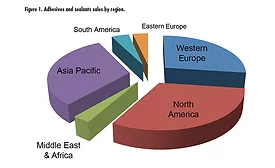
The ChemQuest Group estimates the global adhesive and sealant industry to be approximately $53 billion at the end of 2015, comprised of $46.3 million in adhesives and $6.5 billion in sealants. This figure represents an increase of 3.5% in 2015.
The adhesives and sealants industry has a continuing need to close the gap between formulators in the R&D laboratory and end users in the manufacturing and applications environment.
Comprehensive initiatives designed to preserve and improve the environment are included in virtually all manufacturers’ corporate communications. According to the Sheldon Group, 25% of major brand owners have implemented scorecards to rate suppliers and products on environmental impact, and 30-40% more are being developed.
In my 30 years as a senior materials engineering manager with Navistar International, a truck and engine OEM, conventional automotive and truck body manufacturing plants predominantly used 1K epoxy structural adhesives due to their superior bonding performance and manufacturing-friendly properties.
Available through the U.S. Green Building Council’s Leadership in Energy and Environmental Design (LEED®) program, LEED v4 is the newest iteration of a benchmark standard for high-performance green buildings.
Improving customer spending is expected to drive demand for consumer and packaging adhesives and sealants. consumer and packaging adhesives and sealants.
The ChemQuest Group currently estimates the value of the global adhesives and sealants industry at approximately $51 billion, comprised of $44.5 million in adhesives and $6.2 billion in sealants.
I hear many salespeople complain that their product has become commoditized. This can be one of those “perception equals reality” traps; that is, if you believe your product or service is a commodity, then you are helping to make it a commodity.