This second installment of a two-part series higlights the value proposition of independent material testing and validation to high-value end-use markets.
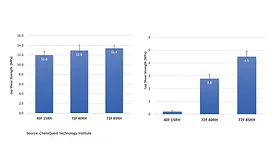
Independent testing and third-party validation of application-specific and customer-required adhesive products are expected across the value chain. It is especially important to validate adhesive performance for the electronics industry.
This first installment of a two-part series highlights the value proposition of today's adhesive chemistries and curing methods to high-value end-use markets.
This first installment of a two-part series highlights the value proposition of today's adhesive chemistries and curing methods to high-value end-use markets.
Electrically conductive adhesive use is rising as fine spacing, environmental restrictions, and new materials impact or replace vehicle assembly methods.
In Latin America, end users in growth markets are eager for new adhesive technologies and products that improve throughput, mitigate against health and safety risks, and reduce total production costs.
The challenge in developing a useful guide involves balancing comprehensive coverage of in-scope topics without inevitably getting lost in the proverbial weeds.
Buyers and end users of adhesives and sealants―who are new to adhesives technology―want to learn all they can about chemistries, resin types, application methods, performance properties, dissimilar substrates, engineering practices, and formulated products on the market.
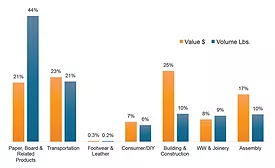
Construction and building-related end uses make up approximately 25% of the market value for adhesives and sealants in the U.S.
The global market for adhesives and sealants in 2017 reached 34 billion dry lbs, valued at $59 billion. North America represented approximately 30% of the global market.
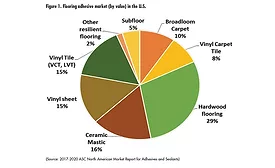
In 2017, the U.S. ceramic tile market for flooring and wall installations was valued at $3.6 billion, representing 14.2% of the flooring market value with a growth year-over-year of 6.8%, according to Floor Covering Weekly (7/23/2018).
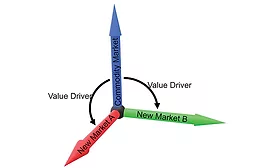
With increasing competition on a global scale, it can be challenging to position both new and existing products for ever-growing market share and, more importantly, to diversify into new markets that provide a hedge against economic fluctuations. Following are two major lessons our clients have learned that may benefit other suppliers.
 RSS
RSS