When the economy stabilizes, it is anticipated that M&A activity overall will rise, and companies looking to make a move in the market must optimize their strategy to get the best results.
Optimal execution throughout a merger, acquisition, or divestiture is necessary to achieve the best possible deal and position your company for future success.
Because regulations regarding materials of concern are becoming increasingly complex all around the world, developing a protocol for materials replacement is a necessity for those operating in the CASE sector.
When creating a strategy for digital tools, companies should review their corporate goals and resources, focus on customer interactions, and balance the risk and reward.
Digital strategy and all of its semantic offshoots should serve as implementation tools for your overall corporate strategy, but it can be difficult to know where to start when developing such a strategy.
Lightweighting of structures and combining of materials to take advantage of their best properties is becoming a part of engineering design, and adhesives will play an increasing role in those future designs and applications.
Lightweighting of structures is most often associated with automotive structures. However, lightweighting is a challenge across the transportation sector, including trucks, trailers, buses, passenger rail cars, and even heavy earth-moving equipment and cranes.
Though bioinspired approaches to adhesive R&D often lead to great improvements in the lab, translating these sophisticated chemistries to commercial scale is a considerable challenge.
With the host of diverse biomaterials produced by an estimated 6.5 million species on land and 2.2 million species in the oceans, the biomimicry toolkit that man has to play with is, for all practical purposes, limitless. The superior designs discovered in nature have inspired many research programs from around the world, both at the university and commercial levels. The gecko, sandcastle worm, caddisfly, mussel, and sea cucumber are all species that have inspired new chemical approaches to creating adhesives with unique performance features.
Pressure-sensitive tape has a high degree of functionality, which in turn often results in savings of time and money, quality improvements via enhanced performance, and improved aesthetics. In multiple examples across several markets, process improvements such as reduced preparation time and decreased downtime add to the overall value generated by pressure-sensitive tape use.
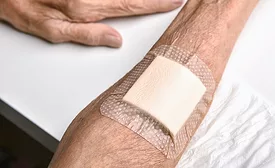
Pressure-sensitive adhesives (PSAs) offer easy application and secure bonding, including adhering wound care dressings to skin. Skin is a variable substrate, however, and consideration must be given to various skin types to ensure dressings can be securely attached and easily removed without skin damage.
The definition of “sustainability” is in flux. As it pertains to construction, sustainability is constantly evolving to encompass varying approaches and priorities. In the U.S., sustainable construction is the method of creating buildings and using processes that are environmentally reliable and resource efficient throughout the building’s life cycle, including design, construction, operation, and renovation. Western Europe defines sustainable construction as a way to build that aims to reduce health and environmental impacts affected by the construction process or by buildings.
When manufacturers are looking to use adhesives in an assembly operation, three steps must enter into the decision process: suitability, compatibility, and capability.
 RSS
RSS