To address the evolving needs of the workforce and in evaluating the role that the Pressure Sensitive Tape Council (PSTC) can play in encouraging the continued health of our industry, we launched PSTC Tape Academy. The academy serves as a resource for individuals on a variety of career paths and in different roles, in addition to those who are new to the field of PSA tape or considering making a switch to our industry.
Bonding polystyrene foam to steel and wood is an application that was traditionally done with contact cements or other solvent-based adhesives. Due to health and flammability concerns, however, the modern trend is to use 100% reactive systems.
Recently developed hybrid technology enables construction professionals and do-it-yourselfers to benefit from a sealant that offers superior weatherability and durability.
A new advanced modified polymer sealants line combines the best attributes of traditional silicones and polyurethanes, enabling construction professionals and do-it-yourselfers to benefit from a sealant that offers superior weatherability and durability.
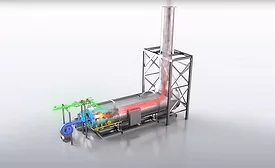
An air pollution control system designed and installed for a major tape coating line exemplifies how the best economic solution can also be the best environmental solution.
As more manufacturers across the adhesives and sealants industry embrace sustainable manufacturing processes, they are finding their decisions are also improving their financial bottom line. There does not need to be a trade-off, and green manufacturing is proving to be a win-win.
The characteristics of ultraviolet (UV)-cured acrylic adhesives outweigh alternatives when health, the environment, longevity, and durability are priorities.
Sealants and adhesives play an integral role in the building envelope. However, not all adhesive formulations are created in the same way or from the same materials. Some may actually interact negatively with various building materials or perform temperamentally in areas of the country that experience broader seasonal temperature fluctuations. Choosing the correct adhesive saves valuable time and reduces labor, as well as the likelihood of costly rework.
Although binder adhesives are a small component of the lithium-ion batteries that power electric vehicles, they play a critical role in ensuring performance and efficiency while providing improved battery kinetics.
Materials companies are searching for solutions to refine the Li-ion battery, increase its capacity, and enhance its charging capabilities without increasing its weight. New innovation is required to take Li-ion batteries to the next level. Part of the solution lies with binder adhesives.
The definition of “sustainability” is in flux. As it pertains to construction, sustainability is constantly evolving to encompass varying approaches and priorities. In the U.S., sustainable construction is the method of creating buildings and using processes that are environmentally reliable and resource efficient throughout the building’s life cycle, including design, construction, operation, and renovation. Western Europe defines sustainable construction as a way to build that aims to reduce health and environmental impacts affected by the construction process or by buildings.
Though the construction industry has been slow to adopt the use of adhesives and sealants packaged in sausages, advantages for sustainability and efficiency abound.
Despite all the discussion and debate in society over reducing our waste and carbon footprint, sausage packages (also known as chubs) for adhesives and sealants continue to gain little support in the building industry—even though their reduced packaging and low waste factor represent a step change in sustainability.
The chemical recycling of polyurethane (PU) and polyethylene terephthalate (PET) from waste materials is evolving into a viable alternative to mechanical recycling.
Old mattresses, insulating material, furniture, and steering wheels—these raw materials are not particularly appealing. But the solvolysis process is enabling Rampf Eco Solutions GmbH & Co. KG to recycle these types of waste materials and create customized polyols for applications ranging from foams to adhesives.
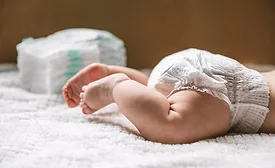
Adhesive manufacturers can partner with players all along the supply chain to reduce the environmental impact of single-use disposable hygiene products.
Adhesives are not typically top of mind to consumers of disposable hygiene products. They are not a large part of the product and can possibly be an afterthought by the article producers themselves. However, it is important to recognize that adhesives have several important tasks in these applications, from sealing and securing the diaper or pad core’s structure to holding elastics firmly in place inside the diaper.
 RSS
RSS