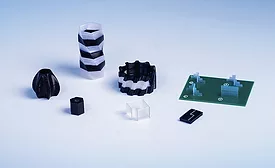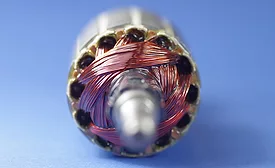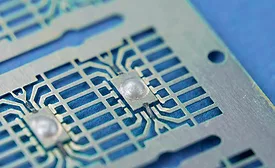
Vacuum potting is mainly aimed at electronic components with small openings and complex internal structures.
June 10, 2020
The potting of electronic components involves filling the assembly with a compound such as liquid resin (e.g., epoxy, silicone, polyurethane) to protect it from environmental or use conditions like moisture, humidity, and vibration. Any air entrapment in the potting compound can result in air bubbles that may cause performance problems in the finished component.
Ideal for use in automotive and microelectronic applications, DELO’s epoxy resins have reportedly been optimized specifically for industrial 3D printing applications.
May 19, 2020
DELO recently announced that it has developed light-curing epoxy resins that create new possibilities for liquid additive manufacturing.
Dr. Dave explains why this type of application can often be tricky, particularly due to the large differences in thermal expansion coefficients between the glass, the steel, and the adhesive.
You don’t indicate which substrate is on the outside, and this does make a difference in the possible choice of adhesive. Epoxy adhesives were traditionally used for this application, but they should be used with care as they may be too rigid.
Kisling selected a number of its adhesives to be extensively tested in a special fire laboratory.
April 13, 2020
Kisling AG recently announced that its ergo range of structural adhesives has been tested and certified to meet fire protection requirements in rail transportvehicles.
The COX ElectraFlow Dual Ultra 600-mL two-component cartridge cordless unit is reportedly ideal for operators using high volumes of sealant or two-part epoxy products.
April 9, 2020
Sulzer recently announced that it has launched a new adhesive and sealant dispenser powered by Bosch Professional’s 18-V lithium-ion batteries.
Henkel reports that Teroson EP 5020 TR can be applied at room temperature in a smooth, flameless, and solder-free process.
April 7, 2020
Henkel recently introduced Teroson EP 5020 TR, a two-component epoxy-based cold rebuilding material designed to replace conventional tin solder in aftermarket repairs of automotive body damages.