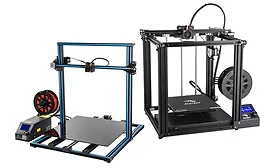
The versatile 3D printing units can be used in numerous applications.
Epic Resins recently announced the addition of two 3D printers to its laboratory that will be used to help customers innovate faster and more efficiently.
The acquisition expands Excelitas’ technological scope and its geographic footprint in Europe, North America, and Asia.
Excelitas Technologies Corp. recently announced that it has completed its acquisition of PCO AG, a leading manufacturer and innovator in digital imaging for a wide range of scientific and industrial applications.
Silane-modified polymers (SMPs) are particularly suitable for formulating elastic adhesives, sealants, and coatings. How can additives help optimize performance?
Adhesives and sealants are part of our daily lives, although they are often invisible. They ensure that our food is packaged and promoted safely, that our houses are wind- and waterproof, and that our communication and mobility needs are served in safe and efficient ways. Thousands of everyday items, such as mobile phones, washing machines, personal hygiene products, shoes, clothing, building products, batteries, automobiles, rail cars, ships, and even airplanes, are nowadays only possible thanks to high-performance adhesives and sealants.
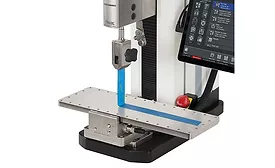
The development of adhesives and substrates for wearable medical devices is challenging and requires careful consideration due to the nature of human skin and the characteristics of the specific device.
The wearable medical device market is growing rapidly, driven by demand for innovative products that offer personalized care such as activity monitoring, point-of-care diagnostics, and dispensing (insulin, medications, electrolytes, etc.). These devices are quickly becoming a valuable part of many care plans, as they lessen the patient’s time in medical facilities—which has been critically important throughout the COVID-19 pandemic—and reduce healthcare costs.
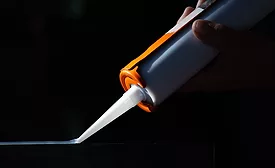
The ability to efficiently and accurately dispense adhesives, sealants, and other materials is absolutely vital in assembly operations. Companies that rely on manual methods run into issues with operator error, slow speeds, excessive waste, and other problems.
The global pandemic has accelerated demand for manufactured goods of many types, as consumers stay home and manufacturers continue to operate as essential businesses.
 RSS
RSS