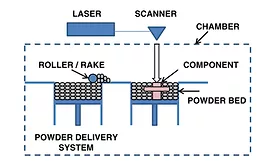
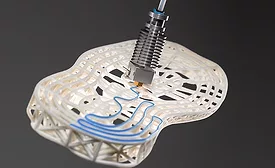
Additive manufacturing (AM), also known as 3D printing, has seen increased adoption across industries and regions for producing a variety of end-use parts.
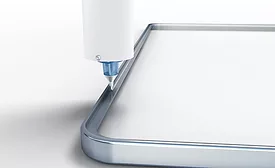
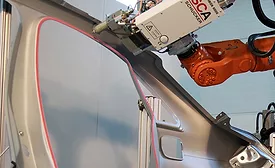
Applications of technologies featured at the expo include the bonding of upper material to the outsole of shoes and the application of adhesives to smartphone displays.
On September 14-16, Covestro will hold Digital Expo 2021 to highlight its technological offerings in four categories: Mobility, Living, Construction & Infrastructure, and Packaging.
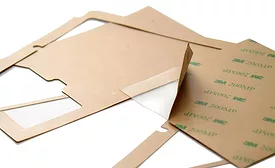
These gaskets will benefit designers seeking a thin, resilient product with an adhesive backing.
Stockwell Elastomerics recently announced the availability of gaskets fabricated from .010- and .020-in.-thick Rogers BISCO® HT-6000 series silicone rubber with .002-in.-thick 3M™ adhesive transfer tape 9667MP acrylic adhesive laminated to one side.
This is the company's inaugural consumer electronics-specific, bio-based PUR hot-melt adhesive.
Henkel recently announced the development and commercial availability of LOCTITE® HHD 3544F, a bio-based polyurethane reactive (PUR) hot-melt adhesive designed for consumer electronics assembly.
We have a problem maintaining adhesion to two steel surfaces at divergent temperatures because of the response of materials to thermal conditions when going through heating and cooling cycles.
We are using epoxy adhesives to bond steel substrates that are exposed periodically to both 150˚C and as low as 0˚C. Our problem is in maintaining adhesion to the two steel surfaces at such divergent temperatures because of the response of materials to thermal conditions when going through heating and cooling cycles. Do you have any suggestions?
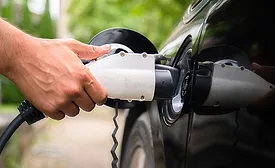
The electric vehicle space is an area that will provide a tremendous opportunity to converters and others working with high-performance, pressure-sensitive adhesive (PSA) tapes.
Automakers are investing heavily in electric vehicle (EV) technology and are setting long-term goals for phasing out internal combustion engines. This strategic shift is driven by government policy, long-term competitiveness, and innovations in lithium-ion technology and production that have extended the EV driving range and reduced battery pack costs.
The transformation of the world’s vehicles from internal combustion engines (ICEs) to electric vehicles (EVs) relies in large part on what holds the vehicles together—namely, adhesives.
Called thermoset polyesters, these materials are glass fiber-reinforced unsaturated polyesters. They are also often referred to as “sheet molding compounds” (SMCs), “fiber-reinforced plastics” (FRPs), or simply “fiberglass.”