The 2022 World Adhesive and Sealant Conference (WAC2022) will be held this month in Chicago, and I’m thrilled that our global industry will have the opportunity to reconnect, safely and in person. WAC2022 will offer fascinating keynotes, a broad range of technical sessions, the much-anticipated EXPO, and plenty of opportunities to connect with colleagues.
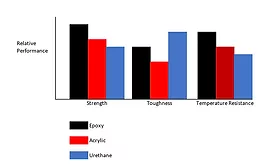
Adhesives are used in a wide range of applications, such as transportation (automotive, rail) and architectural, among many others. Though the adhesives themselves are not directly exposed to the environment in most of these applications, one or more weathering factors can still affect the adhesive performance.
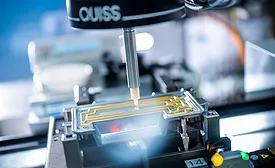
Scheugenpflug recently announced that it has added an inspection system to its portfolio, making quality monitoring an integral part of the dispensing cell to save time and space.
SEMICON Taiwan 2021 will take place December 28-30 in Taipei.
Nordson Corp. recently announced that it will demonstrate its latest solutions for semiconductor packaging and electronics manufacturing at SEMICON Taiwan in Taipei.
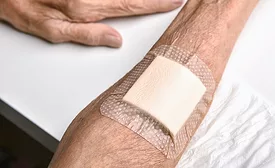
Pressure-sensitive adhesives (PSAs) offer easy application and secure bonding, including adhering wound care dressings to skin. Skin is a variable substrate, however, and consideration must be given to various skin types to ensure dressings can be securely attached and easily removed without skin damage.
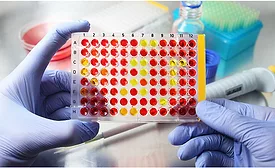
When someone mentions medical adhesives, the first thought that often comes to mind is skin adhesion. It’s understandable, since nearly everyone has worn some type of medical adhesive product—from a simple bandage to an electrode, athletic tape, IV cover, and so on. However, an entire world of medical adhesives goes unnoticed by many: diagnostics.
When manufacturers are looking to use adhesives in an assembly operation, three steps must enter into the decision process: suitability, compatibility, and capability.
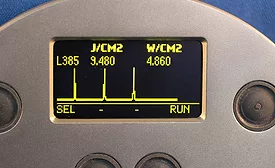
It is important to consider the variables associated with the LED source and proper measurement tools in order to understand, maintain, and control the adhesive curing process.
UV LEDs with peak spectral outputs of 365, 385, 395, or 405 nanometers (nm) are increasingly being used to cure adhesives formulated to work with LEDs. The impact of spectral differences should be evaluated based on the adhesive, photoinitiator package, and desired cure properties.
 RSS
RSS